

It’s April 2026.
A ceasefire is in place between the US and Iran while they negotiate what will ultimately be the best case scenario for the former. A ceasefire is not in place in Lebanon where 10 bombs went off simultaneously within 10 minutes all across the country last week. A ceasefire is not in place in our hearts. Those are very much on fire.
I’ve never lived in Lebanon, but I feel with my country like I’ve always been there. Like I’ve known nothing else, although I’ve always known something else. I’m drawn to it in ways I can’t quite explain.
I owe that feeling entirely to my dad. It all comes back to him and his love for his land, especially that little piece of it he owns in the village he’s from in the North of Lebanon. He designed it to be 20% house, 80% garden, intentionally. When you first walk in, you couldn’t tell there’s a house in there. The land takes supremacy. We live with the land; the land doesn’t live with us.
On that eighty percent lies acres as far as the eye can see and about 150 shades of green. Every corner was conceived to tell a story. The lemon garden for seasonal lunches celebrating the land’s most versatile fruit. The surrounding farmland, home to a switching roster of tenants depending on the season: chilis, pomegranates, wild za’atar, potatoes, leef, oranges, aubergines, pomelos.
The cedar forest to remind you of what the land symbolizes: rootedness, majesty, longevity. The olive grove. Kilometers of it. Producing the finest olives, soaps and a perfect shade of liquid gold.
Every time we visited, whether a month had passed or 12, my dad would give us the grand tour. Hands behind his back, head held high, he would tell us those stories over and over again. You would think it would get repetitive, but when you realize the source of it is profound pride, you take it in as many times as necessary. Every single tour was my dad’s attempt at passing something down: a sense of self, place, identity and belonging; a sense that: this land is very much yours too.
Thirty years later, I ask myself can you really inherit a homeland?
For the diaspora, it’s a question that reigns supreme. For the millions of us living outside the motherland, we know the land only from what our parents have told us about it – their memory of it – and the rituals they pass down.
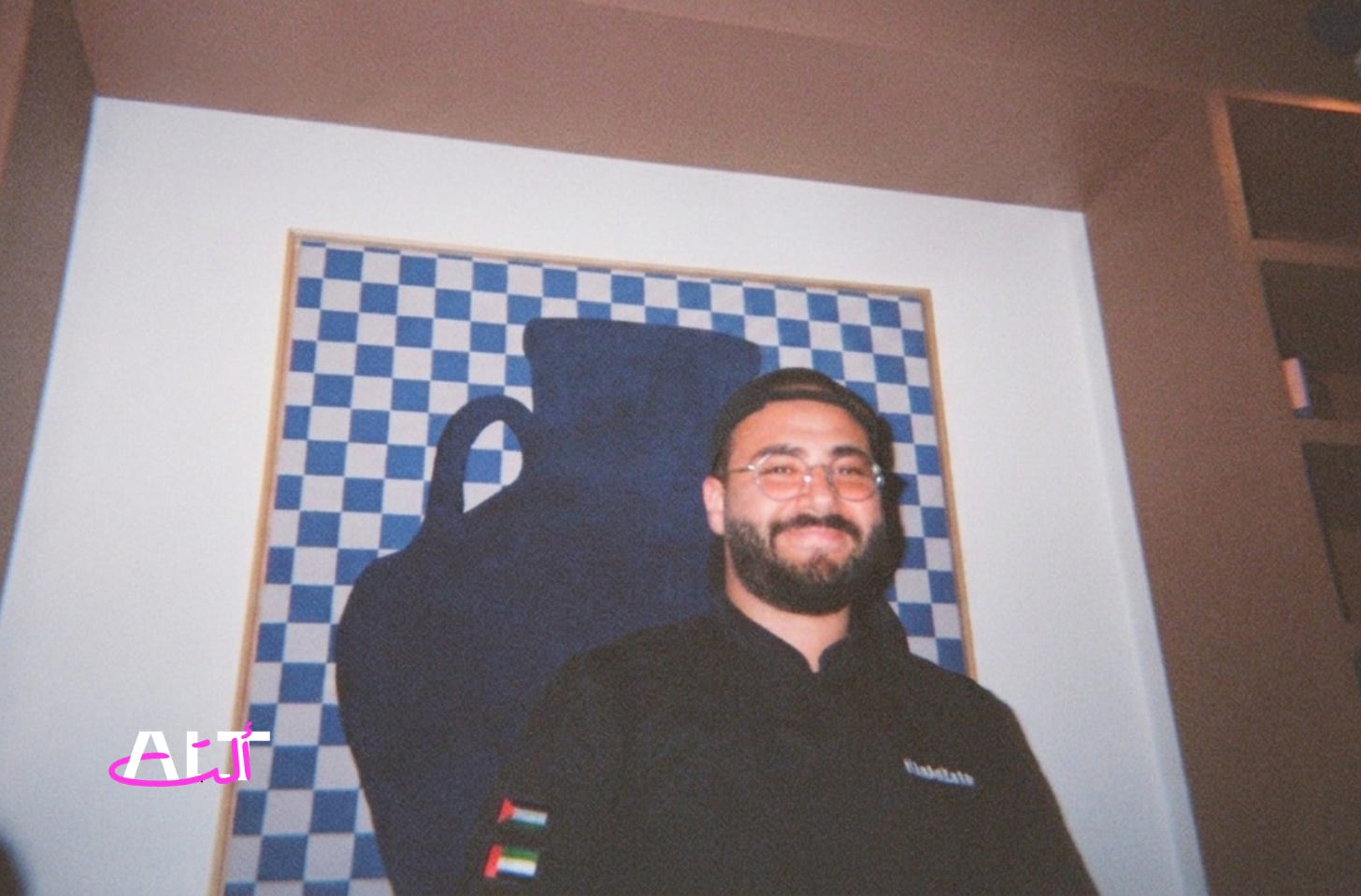
For Chef Khalid Walid, as for many of us, those memories and rituals start and end in the kitchen. As a kid, he would linger in the kitchen doorway watching his mother and grandmother at work with absolute fascination. Mloukhiyyeh leaves stirred into a pot of chicken stock that had been simmering on the stove for hours. A maqloubeh flipped effortlessly, revealing layers of tender eggplant, spiced rice, golden chicken and steam rising in fragrant curls. Dozens of wara’ enab leaves rolled one by one, each packed with lemony rice, stacked in neat rows, waiting their turn in the pot.
He sat there as a spectator, listening to the stories they told as they waited for the stock to simmer. The story of msakhan, for instance. A Palestinian dish widely misunderstood to be about chicken, when the real protagonist is invisible, happening quietly in the background, making up a third of the dish: the olive oil. How the farmers would celebrate the first press of the season by soaking taboon bread in that fresh, unfiltered, peppery oil, layering it with wild sumac and slow-cooked onions, the chicken almost incidental on top.
He learned the geography of his motherland through knowing where ingredients come from. Olives from Jenin and Nablus. Za’atar and sumac from the wild hillsides. Oranges from Jaffa. Watermelons from Jenin to Gaza. Soap and knafeh from Nablus. Fish from Gaza. Grapes and raisins from Hebron. Every ingredient is a coordinate and every dish a map of a place that exists vividly in Khalid’s mind.
The thing about inheriting a homeland you’ve never experienced is that it exists in your imagination. Detached from reality, it becomes, in many ways, a curse. The more our minds resort to simulated versions of the world, the more dissatisfied we become with the real one. For those of us in the diaspora, think about how many times reality has collided with the imaginary version of our homelands, and how hard those collisions have been. Our entire lives have been a series of disappointments.
Our parents carry a different version of the same curse. Their memory is physical; they’ve touched, smelled, seen, lived the land. Their nostalgia has edges. They knew it whole and are watching it break over and over again, with the fear that it may never go back to what it used to be, and that their children will never experience it the way they have. That grief is its own kind of unbearable.
Memory can only get us so far before it becomes a miserable nostalgia. Sweet but static. A longing that loops in on itself. It’s when we act on it that it can become productive, transforming into something that roots you and brings into sharp focus everything you value and everything you want to bring to the world. Therein lies the true power of nostalgia.
I do believe our generation has the antidote. Carrying our curse is one thing, carrying our parents’ too is another. We owe them the debt of preservation or reassurance that what they handed us won’t die with the distance–that the homeland will outlast them, and us, because we refused to let it become only memory.
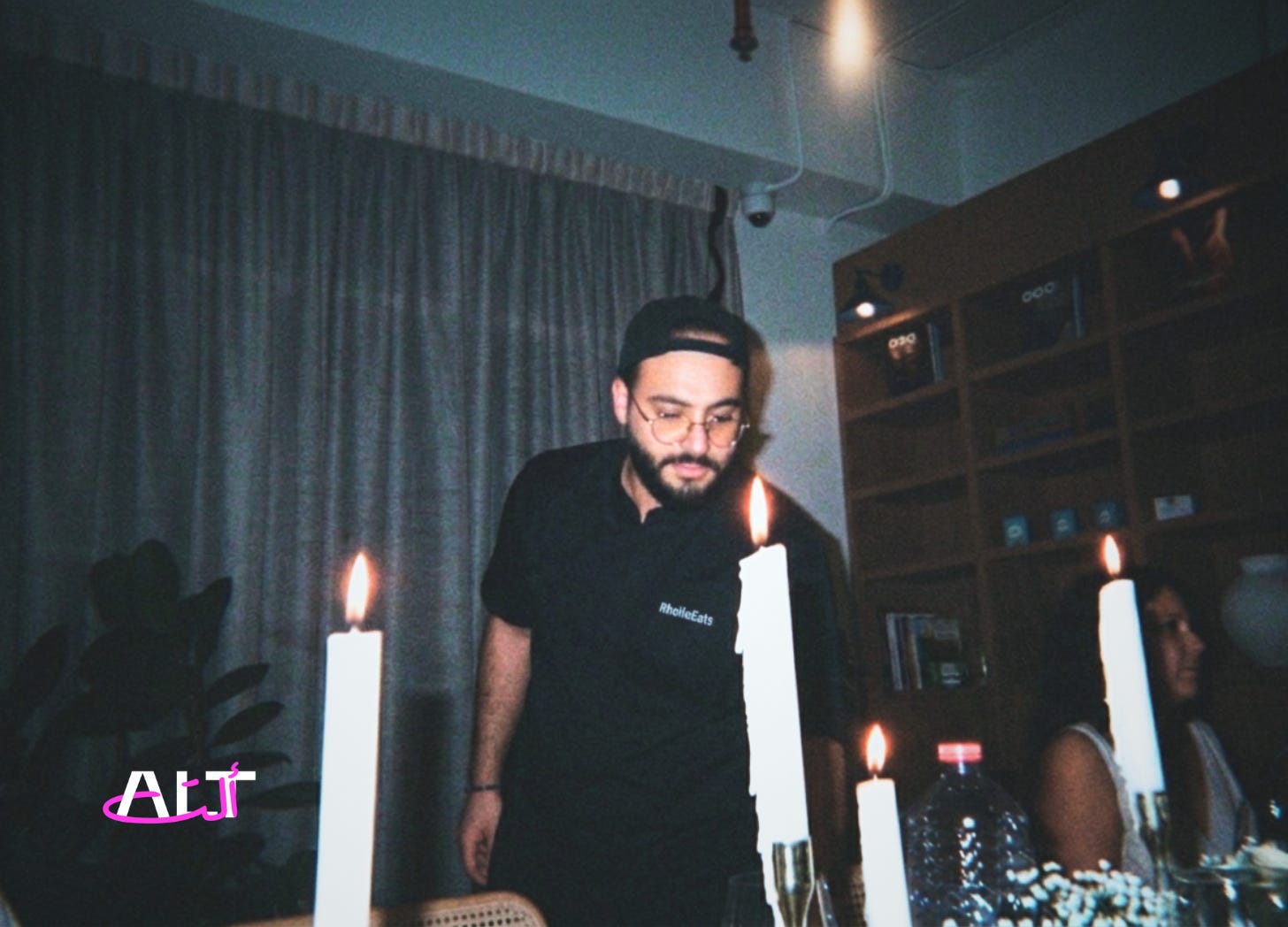
For Chef Khalid, that takes many forms. His supper club, Come with to Falasteen, is a tribute to his mother, grandmother and Palestinian food. I’ve had the privilege of attending one and witnessing the level of detail and care that goes into every single thing, from the rotation of the forks all the way to the richness of his cooking. It is obvious this is personal.
If love is in the details, Chef Khalid is infatuated.


Khalid is doing more than honoring Palestine’s rich culinary past. He is writing its future. His maqloubeh arrives with slow-cooked lamb necks, sweet fried eggplants and toasted nuts. He sprinkles Gazan dugga and Palestinian olive oil over his version of a caprese: Uzbek tomatoes, Maldon salt, buffalo stracciatella. His wara’ enab swims in a tamarind and raspberry-infused pomegranate molasses. And the star of the table, my personal favorite: his signature msakhan rolls, for which no words are adequate.
In a world that keeps trying to relegate Palestine to the past tense, Khalid insists on its future.
Watching him cook, my wonder becomes wander.
You can inherit a homeland. Not the way you inherit land or money as something handed to you whole with a title deed and a signature, but the way you inherit a language, or a way of moving through the world or the pride in a man’s eyes as he walks his olive grove with his hands behind his back. You inherit it through the stories told over a simmering pot, through knowing where ingredients come from and especially, through the act of carrying it forward.
My father gave me Lebanon the same way Khalid’s mother and teta gave him Palestine: as a place to embody, carry and insist on.
Amazing as always! ❤️❤️